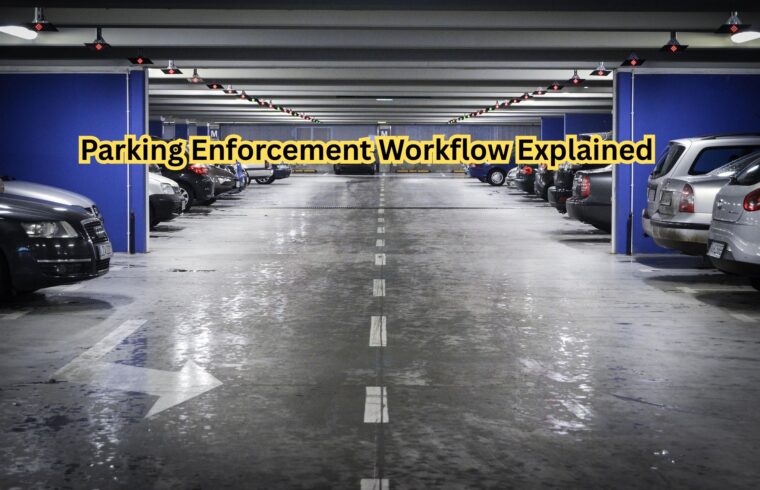
The organized procedure used to keep an eye on, oversee, and control parking operations is known as the “parking enforcement workflow.” It increases productivity for users and operators while guaranteeing adherence to regulations. Modern workflows are more automated and data-driven thanks to the development of smart technologies, which decrease manual labor and improve accuracy in monitoring infractions, imposing fines, and keeping parking systems in order. Parking Enforcement Workflow Explained highlights how these systems streamline operations efficiently. Parking Enforcement Workflow Explained also emphasizes the role of automation in reducing human errors and improving compliance. Overall, Parking Enforcement Workflow Explained provides a clear understanding of how structured processes enhance parking management systems.
Monitoring and Detection
Monitoring parking spots with sensors, cameras, or mobile patrols is the first step in the procedure. These technologies identify infractions including unpaid sessions, overstaying, and illegal parking. Automated detection decreases human error and increases speed. Additionally, real-time monitoring enables operators to promptly detect problems, guaranteeing improved space utilization and a more seamless parking experience for drivers.
Verification and Validation
The system or an enforcement official confirms the information when a possible infraction is found. Before taking any action, this phase makes sure the infraction is authentic. Verifying license plates, payment records, or permissions are examples of validation. While preserving equity in enforcement procedures, accurate verification reduces disagreements and fosters user trust.
Violation Issuance
The offender receives a violation notification following confirmation. This can be done physically with printed tickets or digitally with mobile apps. Modern systems often send instant notifications, making the process faster and more transparent. Digital issuance also reduces paperwork and allows easy tracking of violations for both operators and vehicle owners.
Payment and Resolution
Fines can be paid by drivers via kiosks, mobile apps, or internet platforms. Both user convenience and compliance are enhanced by flexible payment options. Additionally, some systems permit dispute resolution or appeals within the workflow. Parking management teams’ administrative workload is lessened and a more seamless experience is guaranteed when payments and complaints are handled effectively.
Automation and Integration
Advanced workflows can be integrated with mobile applications, payment gateways, and access control systems. Automation expedites the entire process and minimizes human interference. Automatic license plate identification, for instance, can rapidly match cars with payment records, facilitating smooth and effective enforcement in crowded metropolitan settings.
Benefits of an Efficient Workflow
A well-thought-out parking enforcement workflow boosts user satisfaction, income, and compliance. It guarantees equitable rule enforcement and lowers operating expenses. Parking operators can establish a balanced system that benefits administrators and drivers while preserving order in parking places by utilizing automation and technology.
Conclusion
Workflows for parking enforcement have changed over time, moving from manual to intelligent, automated systems. Every stage, from detection to resolution, is essential to preserving effectiveness and equity. Adopting a streamlined workflow is crucial for efficient parking management and an improved user experience as cities expand and parking demand rises.